Classic Everest route - 16 days

Reach Everest Base Camp and Kala Patthar on Nepal's classic Khumbu trek.

A complete guided journey from Kathmandu to Lukla, Sherpa villages, Everest Base Camp, and the sunrise viewpoint at Kala Patthar, with carefully placed acclimatization days.

Duration16 days
MaximumKala Patthar, 5,545 m
Best SeasonsSpring and autumn
DifficultyChallenging
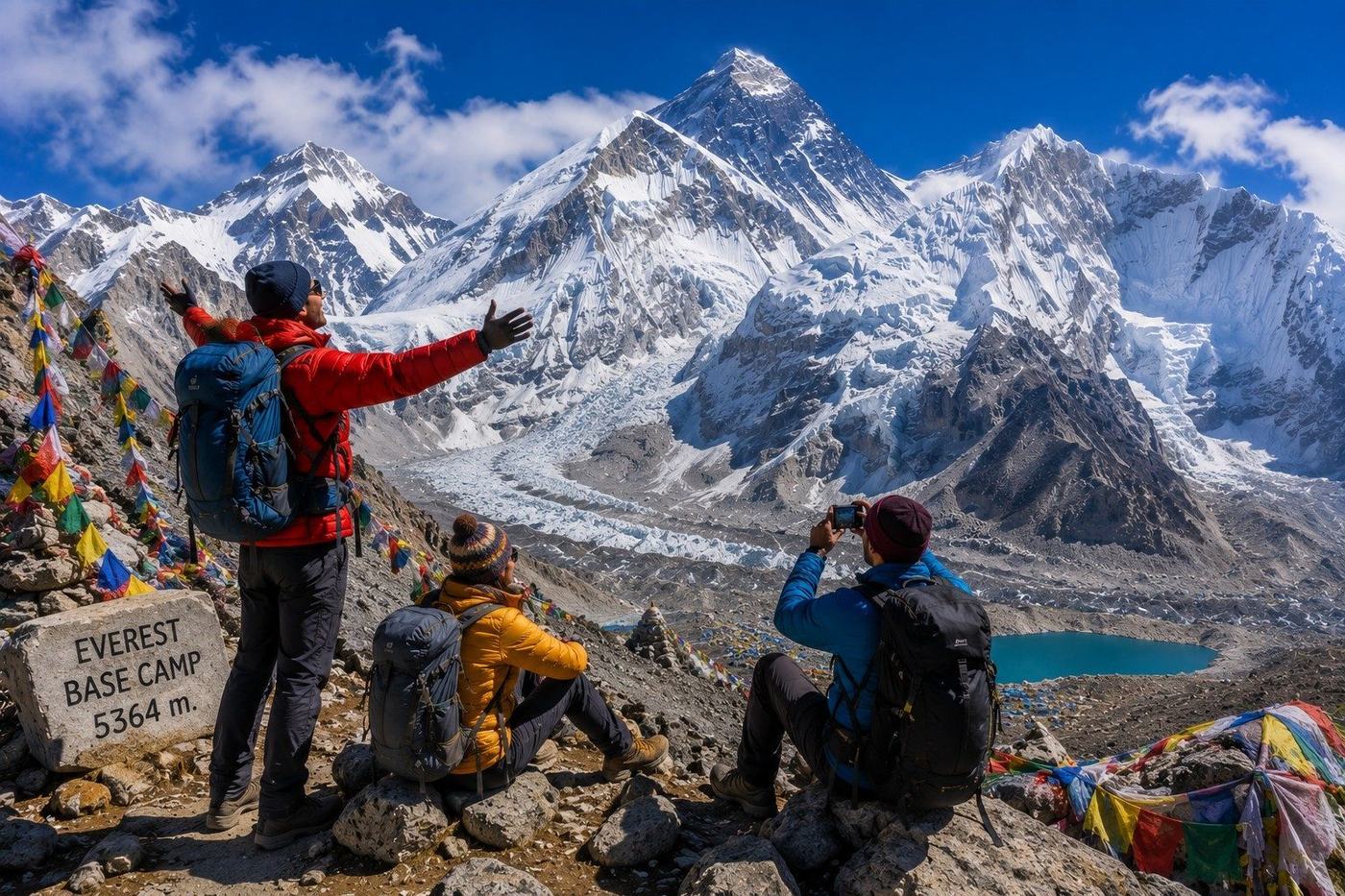
Himalayan mountains on the Everest Base Camp trek

Tour Introduction

A complete Everest journey, from Kathmandu to the high Himalaya.

The Everest Region Trek moves from Lukla through Dudh Koshi villages, suspension bridges, rhododendron forest, Sherpa trading centres, monasteries, glacial valleys, and the alpine world beneath Mount Everest.

This 16-day programme includes Kathmandu arrival support, cultural sightseeing, trek preparation, acclimatization, guided teahouse trekking, Everest Base Camp and Kala Patthar, post-trek leisure, and airport departure service.

Route Snapshot

The historic Khumbu route without an additional high-pass crossing.

  • RegionKhumbu and Sagarmatha National Park
  • Trek sector12 days within the complete 16-day programme
  • AccommodationKathmandu hotel and mountain teahouses
  • Route styleGuided high-altitude trekking with acclimatization
  • Kathmandu
  • Lukla
  • Phakding
  • Namche
  • Tengboche
  • Dingboche
  • Lobuche
  • Everest Base Camp

Highlights

The defining moments of the classic route.

This itinerary balances the mountain goals with the pacing, culture, and practical support that the Everest region requires.

1

Mountain Flight to Lukla

Start the Khumbu journey with a weather-dependent flight from Kathmandu or Manthali.

2

Namche Bazaar

Acclimatize in the Sherpa trading centre, with local culture and mountain viewpoints.

3

Tengboche Monastery

Walk through forest to the monastery and classic views toward Ama Dablam and Everest.

4

Two Acclimatization Days

Spend active rest days in Namche and Dingboche before moving higher.

5

Everest Base Camp

Reach the Khumbu Glacier and Everest Base Camp at approximately 5,364 m.

6

Kala Patthar Sunrise

Attempt the classic Everest panorama from the trek's highest scheduled point, 5,545 m.

Day-Wise Itinerary

The complete 16-day Everest Base Camp programme.

Walking times, flight schedules, and route conditions are approximate and remain subject to weather, safety, acclimatization, and guide decisions.

Day 01

Kathmandu Arrival

Airport welcome, private hotel transfer, rest, and an evening briefing according to arrival time.

Kathmandu1,324 m
Day 02

Kathmandu Sightseeing and Trek Preparation

Guided cultural visits, final equipment check, briefing, and preparation for the Lukla sector.

Heritage tourPreparation
Day 03

Fly to Lukla, Trek to Phakding

Fly to Lukla and begin with a gentle walk beside the Dudh Koshi through villages and suspension bridges.

Phakding2,610 m
Day 04

Phakding to Namche Bazaar

Enter Sagarmatha National Park and climb through forest and high bridges to Namche.

6-7 hours3,440 m
Day 05

Acclimatization in Namche

Take an active acclimatization hike toward Syangboche or Everest View Hotel, then return to Namche.

2-4 hoursAcclimatization
Day 06

Namche to Tengboche

Traverse above the Dudh Koshi, descend to Phunki Tenga, and climb through forest to Tengboche.

5-6 hours3,860 m
Day 07

Tengboche to Dingboche

Cross the Imja Khola and pass through Pangboche as the trail opens into the high-altitude valley.

5-6 hours4,410 m
Day 08

Acclimatization in Dingboche

Optional hiking toward Nagarjun Hill for broad Himalayan views before returning to Dingboche to recover.

4-5 hoursAcclimatization
Day 09

Dingboche to Lobuche

Climb toward Thukla, pass the Himalayan climbers' memorials, and continue beside glacial moraine.

5-6 hours4,940 m
Day 10

Gorak Shep and Everest Base Camp

Trek over rocky moraine to Gorak Shep, continue to Everest Base Camp, then return to the lodge.

6-8 hoursEBC 5,364 m
Day 11

Kala Patthar to Pheriche

Make an early weather-dependent sunrise attempt at Kala Patthar, then descend through Gorak Shep to Pheriche.

8-10 hours5,545 m
Day 12

Pheriche to Namche Bazaar

Descend on the main Khumbu trail through familiar villages and forest toward Namche Bazaar.

6-7 hours3,440 m
Day 13

Namche to Lukla

Return through Monjo and Phakding, recross the suspension bridges, and finish with the final climb into Lukla.

6-7 hours2,840 m
Day 14

Fly Lukla to Kathmandu or Manthali

Take the weather-dependent return flight and transfer onward as operations require.

Flight dayKathmandu
Day 15

Free Leisure in Kathmandu

A flexible recovery and weather-buffer day for rest, shopping, spa, laundry, or personal time.

FlexibleRecovery
Day 16

Final Departure

Hotel check-out and airport transfer approximately three hours before the onward international flight.

Airport transferDeparture

Programme Details

What is covered and how to prepare.

The package is built around guided trekking, local support, and practical planning for the high Himalaya.

Included Support

Core support for the Kathmandu and trekking portions of the journey.

  • International and domestic airport transfers, plus the shared Manthali shuttle when required
  • Kathmandu sightseeing with an English-speaking city guide and listed heritage entrance fees
  • Professional trekking guide, assistant guide for groups of five or more, and porter service
  • One porter for two trekkers, with a maximum combined load of 20 kg

Accommodation, Meals and Permits

Stay and trekking administration arranged as stated in the programme.

  • Three Kathmandu hotel nights with breakfast on a twin-sharing basis
  • Basic mountain teahouse accommodation and meals on trekking days
  • Sagarmatha National Park and Khumbu Pasang Lhamu Rural Municipality permits
  • Shared trekking equipment, minor medical kit, required paperwork, taxes, company T-shirt, and farewell dinner

Not Included

Personal and external costs that are not part of the confirmed package.

  • Nepal visa, passport costs, and entry formalities
  • Meals in Kathmandu unless specifically listed as included
  • Personal expenses such as Wi-Fi, charging, laundry, hot shower, drinks, and extra porter service
  • Gratuities and costs caused by weather, illness, disruption, or other circumstances beyond company control

High-Altitude Preparation

Good fitness, steady pacing, and the right equipment matter at every stage.

  • Insurance should cover trekking to at least 5,500 m, medical treatment, helicopter evacuation, and repatriation
  • Train for sustained uphill and downhill walking with a loaded daypack before departure
  • Bring broken-in boots, warm layers, waterproof protection, poles, headlamp, sun protection, and personal medicines
  • Carry a reusable water bottle or hydration system, purification method, sleeping bag, and sufficient Nepalese cash

Trek Questions

Useful things to know before you go.

Altitude, weather, and daily fitness all shape the Everest experience. Your guide's safety decisions always come first.

How difficult is the Everest Base Camp trek?

It is challenging, with repeated five-to-eight-hour walking days, sustained ascents and descents, and high-altitude conditions. Good fitness and preparation are essential.

When is the best trekking season?

Spring, generally March to May, and autumn, generally September to November, are the principal seasons. Weather is never guaranteed.

How long is the programme?

The trek sector is 12 days. Including Kathmandu arrival, sightseeing and preparation, post-trek leisure, and departure, the complete programme is 16 days.

What is the highest point?

Kala Patthar at approximately 5,545 m is the highest scheduled point. Everest Base Camp is approximately 5,364 m.

Is previous trekking experience required?

Multi-day trekking experience is beneficial but not always mandatory. Strong fitness, suitable training, gradual pacing, and honest symptom reporting are essential.

Is altitude illness a concern?

Yes. The programme includes acclimatization days, but guests must report symptoms promptly and follow the guide's decision to rest, descend, reroute, or seek medical support.

Which permits are required?

The programme lists the Sagarmatha National Park Entry Permit and the Khumbu Pasang Lhamu Rural Municipality Permit. Permit rules and fees can change.

Are a guide and porter provided?

The package includes a professional English-speaking trekking guide, an assistant guide for groups of five or more, and porter service at one porter for two trekkers.

What accommodation is used?

Kathmandu accommodation follows the confirmed hotel category. During the trek, accommodation is in basic local teahouses or lodges, normally on a twin-sharing basis.

What food and water are available?

Teahouses commonly serve simple meals such as dal bhat, noodles, soup, fried rice, pasta, potatoes, eggs, bread, tea, and coffee. Carry a suitable water purification method.

Are charging and internet available?

Many lodges offer paid charging and Wi-Fi, but service becomes less reliable at higher elevations and can be interrupted by weather or power conditions.

Is travel insurance necessary?

Comprehensive insurance is strongly recommended and should explicitly cover trekking to at least 5,500 m, emergency helicopter evacuation, medical treatment, and repatriation.

Ready to plan the Classic Everest Base Camp Trek?

Send your preferred dates, group size, and trekking experience. KK International will help you prepare for the right season, route conditions, permits, and support.